Teach new techs to prove the fault before they pull the box
A new tech who swaps an LRU to see if the squawk clears costs you the removal, the shipping, the bench fee and the airplane's time on the ground. In Squawk Talk they make that mistake on a sim, and it only costs them points.
What a no-fault-found pull costs
Every shop knows the box that comes back from the bench with "no fault found" and the squawk still on the airplane. The industry has measured it for years: Collins Aviation's repair shops once found about 35% of incoming units had no fault, and airlines put no-fault-found and could-not-duplicate removals at 40–60% of reported component failures. Those figures are from 2005, but nobody I know thinks the problem went away.
What one pull adds up to
- Labor to troubleshoot, remove and reinstall
- Shipping both ways, and the exchange or loaner
- The repair station's evaluation fee
- Days the airplane sits waiting
- The squawk coming back, because the real fault is still in the wiring
Run your own numbers
What a new tech practices
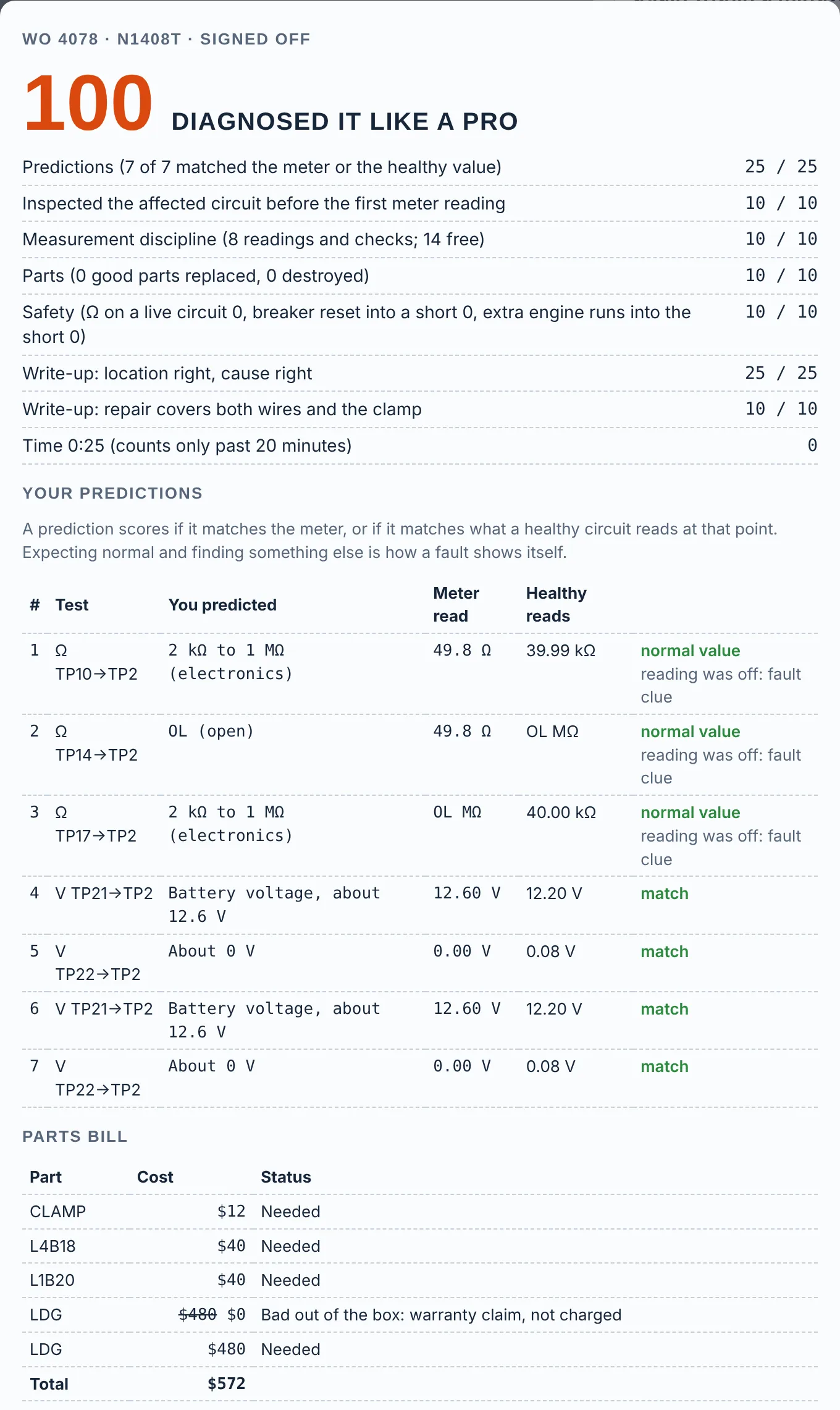
From the Senior Tech level up, every job runs the way a careful tech works a squawk.
Read before you measure
A system brief with normal values opens first. The meter stays locked until they've read it.
Predict every reading
Before each reading they say what a healthy circuit reads at that point. Expecting normal and finding something else is how the fault shows itself.
Parts go on the bill
Swap a good part and it's charged. Fit a new part before the root cause is fixed and it can burn up on the test flight and go on the bill as destroyed.
Write it up
Sign-off runs an ops check, then asks for the location, the cause and the repair. The debrief shows what a pro would have checked first.
3 free seats for 30 days
Three seats, 30 days, no cost. Tell me about your shop on the form and I'll set them up. No payment details needed.
There's no supervisor dashboard yet. Each tech gets a debrief at the end of every job, and I'm building a view for whoever runs training.
Shop pricing
Per seat, per year. Average US training spend in 2025 was $874 per learner, and $1,091 at small companies.
| Plan | Price | For |
|---|---|---|
| Shop 5 | $999/yr | 5 seats, about $200 each. Avionics shops and small repair stations. |
| Team seats | $249/seat/yr | 6 to 49 seats. MROs and larger repair stations. 50 or more: quote. |
| Custom scenario pack | Quote | Your shop's common squawks, or your fleet's systems, built as jobs. |
Squawk Talk is for practice off the aircraft. It isn't maintenance data; real work follows the manufacturer's current data.
Set up a trial or get a quote
Tell me about your shop and the techs you're bringing up. I answer these myself.
Or email squawktalkadm@gmail.com